

close
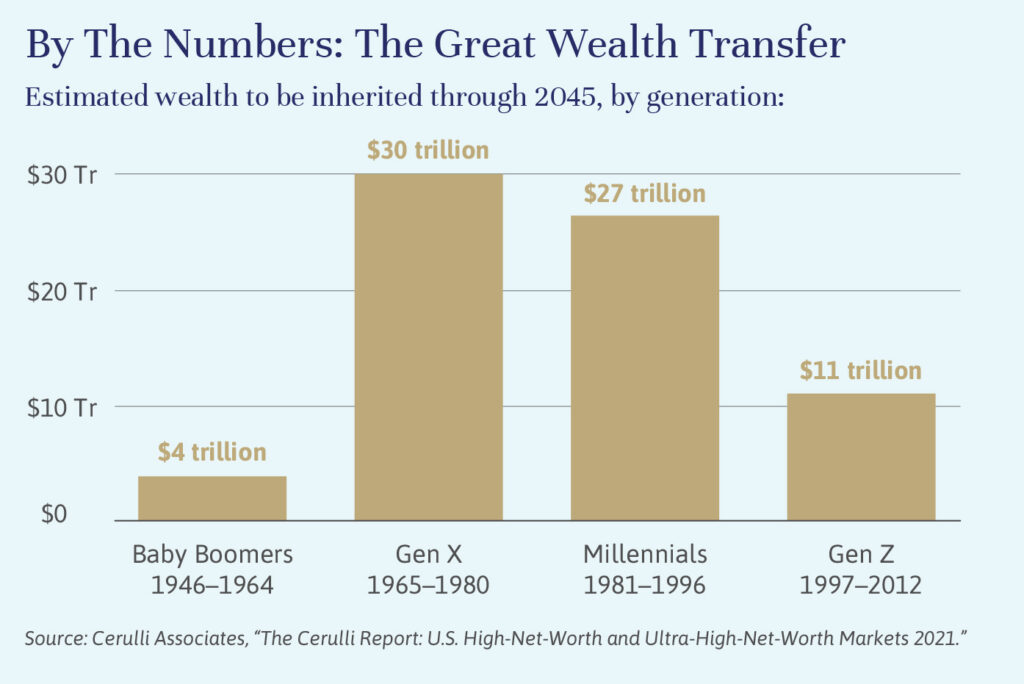
Nonprofit organizations in the United States hold over $13.7 trillion in total assets.1 To put that number in perspective, that’s enough to buy Apple, NVIDIA, Microsoft, Meta, and all the Bitcoin in the world, with a few billion to spare. Private foundations hold over $1.5 trillion in assets, a number that seems likely to grow as baby boomers begin to transfer wealth.2 (See the article by Jeff Maurer here.) Total household wealth is also at an all-time high, and many families are giving to the causes that matter to them.
The U.S. tax code significantly incentivizes charitable giving. Families can shelter up to 60% of their income from tax by giving directly to IRS-qualified organizations under section code 501(c)(3) or to qualified charitable vehicles. If the donation exceeds the income threshold in any given year, any unused deduction can be rolled over to offset future income over five years. The tax code also provides for an unlimited charitable deduction at death for estate tax purposes.
The tax benefits of gifting can also be “stacked.” For example, the IRS allows certain public and private assets with low cost basis to be transferred into charitable vehicles, which can generate a triple tax benefit: (1) no realization of capital gains tax on the sale of the appreciated asset, (2) an income tax deduction for the full fair market value of the gift, and (3) a reduction in the donor’s taxable estate.
While there are many options for charitable giving (contact your advisor for our thoughts on qualified charitable distributions, charitable lead trusts and charitable remainder trusts) most high net worth families that choose to give utilize either a donor-advised fund, or DAF, or a private foundation (or a combination of the two). Donor-advised funds are a convenient vehicle, as the administrative burden is minimal, the cost is low, and families can recommend gifts to nearly any qualified 501(c)(3) organization.
In general, private foundations only make sense for families who plan to allocate significant wealth to charity or for those with very specific or complex giving goals involving multiple generations.
The choice between a DAF and a private foundation is personal, as well as practical. Families with moderate or emerging philanthropic goals often start with a DAF, while those seeking to establish a legacy or engage in sophisticated giving gravitate toward private foundations. All families should carefully consider in close consultation with their advisors what assets to gift, how to give, and when to give.
Sean Brady is a Managing Director and Wealth & Fiduciary Advisor at Evercore Wealth Management and Evercore Trust Company. He can be contacted at sean.brady@evercore.com.
Donor-Advised Funds
A DAF is an account that is part of a larger charitable giving vehicle maintained by a nonprofit organization such as a community foundation or sponsored by a financial institution. Donors make irrevocable contributions, receive immediate tax benefits, and recommend grants to charities over time. The accounts are usually externally managed and invested in specific investment pool options. Donors receive a tax deduction of 60% of adjusted gross income, or AGI, for gifts of cash and 30% of AGI for gifts of appreciated securities.
Pros
Cons
When to Use
A DAF is often a more flexible and cost-effective option than a private foundation. These vehicles are ideal for families that have a simple strategy of giving directly to 501(c)(3) organizations over time, regardless of the funding amount. A DAF is also appropriate when long-term control over investments or bespoke giving strategies are not critical.
Private Foundations
A private foundation is a separate legal entity established and controlled by an individual, family or corporation. It allows for direct involvement in grant making, investment decisions, and broader philanthropic activities. A private foundation is a long-term vehicle for a family to donate through a shared vision, memorialized in a governing document and designed for building a legacy through intergenerational giving. Decision-making authority for grants can be broad and support a wide range of charitable interests. Donors can receive a tax deduction of up to 30% of AGI for gifts of cash and 20% of AGI for gifts of appreciated securities, which is lower than the maximum charitable deduction of 60%. A private foundation is typically best for substantial gifting needs.
Pros
Cons
When to use
A private foundation may be the better choice for families who want greater control over their charitable giving and investment decisions. A private foundation is also suitable for those looking to involve family members in the decision-making process by hiring them as a director or staff (subject to strict IRS rules) or to establish a legacy of philanthropy with long-term impact. The benefits must be balanced with the increased administrative and cost burden.
When to Use Both
For some families, the best approach is a combination of a DAF and a private foundation.
Every family struggles at times to connect. There’s so much at stake: relationships between parents and grown children, relationships between siblings, relationships between partners and other family members, and the happiness of the family as a whole. Wealth, for all its blessings, can add complexity and raise the stakes.
It can get better, though. Some tried-and-true practices in engaging the next generation (and other family members) can help create, grow and preserve wealth through generations. More important still, they can help keep the peace, allowing families to pass on values and appreciate their opportunities, and enjoy each other’s company.
Thoughtful, consistent communication is the starting point. Of course, families are constantly interacting, and parents and grandparents will always make the biggest impression on younger generations through example. But regular family meetings can provide a healthy environment to discuss family members’ common values and goals.
A formal process, which wealth advisors often help facilitate, can help clarify and articulate what the family expects of the next generation and what the next generation can expect from the senior generation. Parents and grandparents have the opportunity to inspire and empower young adults, while ensuring that they have the space and freedom to shape their own lives. Since financial markets and life circumstances are constantly changing, a scheduled check-in builds knowledge and confidence.
Some families create a family mission statement; many involve the next generation in charitable and family investment discussions as a starting point. A good wealth advisor can generally manage this process, helping client families address difficult decisions. If necessary, an independent specialist also can be engaged as part of the advisory team to oversee conflict resolution and manage special circumstances, such as mental health challenges or substance abuse problems.
It’s important that each generation develops its own relationship with the family’s Wealth & Fiduciary Advisors. We can all work together to advance the extended family’s agenda and leverage the broader family plan, but a direct relationship between younger family members and their advisors can help address their individual needs, goals and objectives. Cash flow analysis, portfolio composition and performance, deferred compensation, purchasing homes, borrowing, philanthropy, retirement planning, reviewing the terms of existing trusts, and creating their own trust and estate plan – these are just some of the conversations that the rising generation of family members can engage in.
Good advisors will therefore take the time to get to know each family member, through one-on-one discussions, as appropriate. Done right, the engagement should encourage them to ask more questions and bring more ideas to the table for the benefit of the whole family. And it often makes sense to enlist the family’s broader advisory team, ensuring that the next generation knows the accountants, attorneys, property managers and other advisors – and the next generation of advisors at their firms who will one day be taking over their practices.
Conversations with and within multigenerational families almost always leads to much deeper planning for life’s big milestones, such as launching or selling a business, getting married, having children, and – eventually – creating a wealth transfer plan for the “next next” generation. All of us at Evercore Wealth Management and Evercore Trust Company truly enjoy engaging families in this type of comprehensive wealth planning. Our work is very personal, and it’s rewarding to be a part of a family’s advisory team across multiple generations of growth.
Ashley Ferriello is a Partner and Wealth & Fiduciary Advisor at Evercore Wealth Management and Evercore Trust Company. She can be contacted at ferriello@evercore.com.
Investment and Wealth Management services are provided by Evercore Wealth Management, LLC an investment advisor registered with the U.S. Securities and Exchange Commission (the "SEC") under the Investment Advisers Act of 1940. Registration with the SEC does not imply a certain level of skill or training. Trust and custody services are provided by Evercore Trust Company, N.A. a national trust bank regulated by the Office of the Comptroller of the Currency.
Client retention rate is based on data from 06/30/24 – 06/30/25. Assets under management are as of 06/30/25